

Endometriosis is a condition that affects millions of women worldwide, it’s estimated that one in 10 women suffer from it. Despite endometriosis being a common condition among women, it remains widely misunderstood, especially regarding its impact on fertility. If you're grappling with endometriosis and hoping to conceive, it's important to understand what’s going on and explore available support options.
What is endometriosis?
Endometriosis is a chronic and progressive condition where tissue like the lining of the uterus (the endometrium) grows outside of the uterus, typically on the ovaries, fallopian tubes, and other pelvic organs.
This tissue behaves exactly like the lining of the uterus, thickening, breaking down, and bleeding with each menstrual cycle. However, because it has no way to exit the body, it becomes trapped, leading to inflammation, pain, and the formation of scar tissue or adhesions. 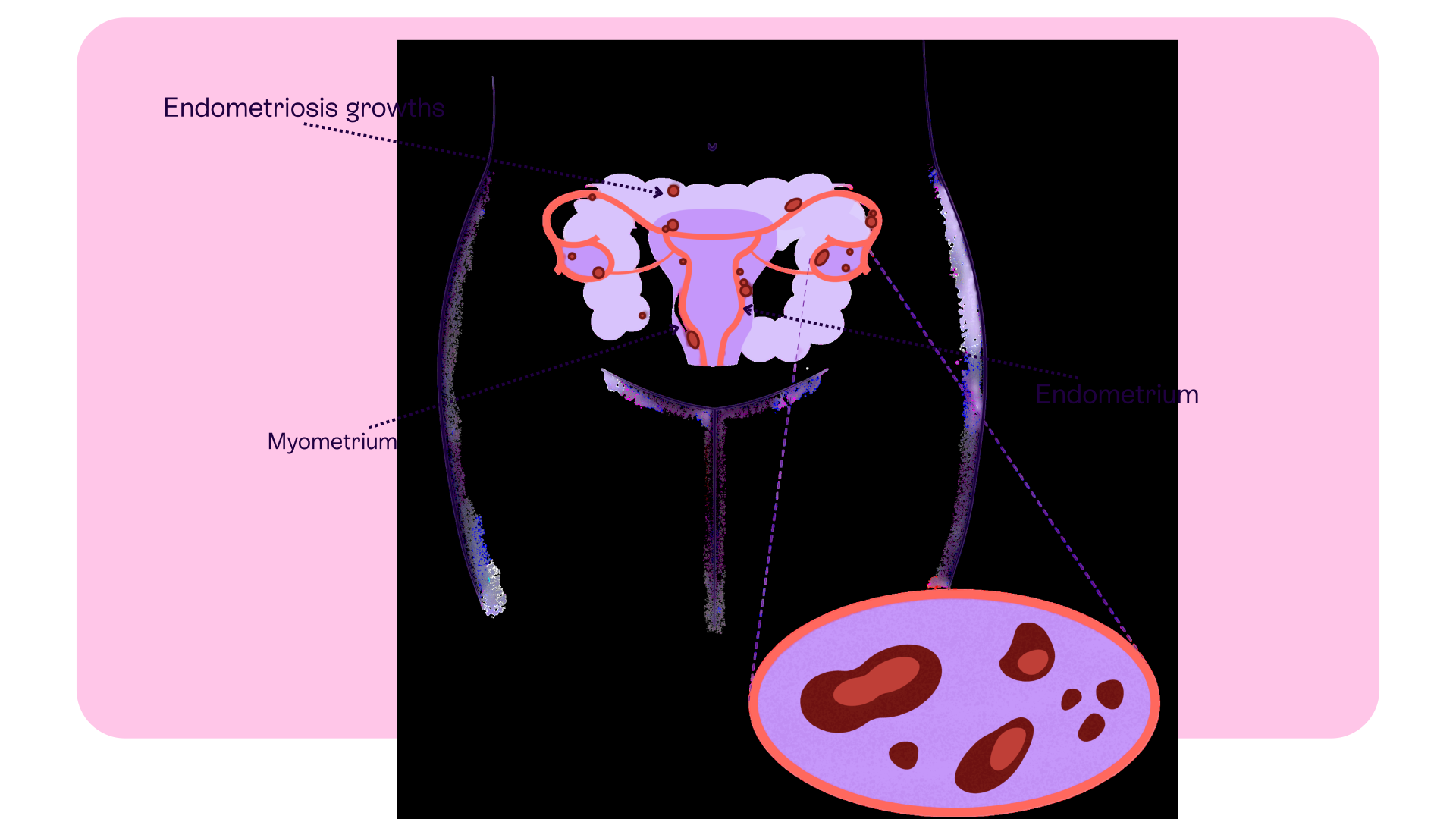
What are the symptoms on endometriosis?
- Extremely painful periods
- Pain during sex
- Pain when passing urine or stools
- Vaginal bleeding when you're not on your period
- Very heavy periods
- Difficulty conceiving
Endometriosis can be hard to diagnose, and whilst periods can be painful for many, if you are experiencing any of the above it’s worth speaking to your doctor to find out more.
How does endometriosis impact on fertility?
The relationship between endometriosis and fertility is complex. The good news is, is that not everyone with endometriosis struggle to conceive, in fact, it’s estimated around 50-70% of people with endometriosis will have no issues at all.
If you are trying to conceive and have either have an endometriosis diagnosis or think you might have it, there are a variety of things you can do to help you on your journey to becoming a parent.
How can I improve my chances of falling pregnant with endometriosis?
While there's no guaranteed way to overcome endometriosis-related infertility, there are steps you can take to help improve your chances of conceiving:
- Healthy lifestyle changes: Focusing on maintaining a healthy weight, eating a balanced diet rich in fruits, vegetables, and whole grains, and engaging in regular exercise such as going for a walk or doing some online yoga classes. Cutting back on things like smoking and alcohol are also important steps to supporting fertility.
- Avoiding stress: This might feel almost impossible but managing stress is essential for fertility. Cortisol, the stress hormone has an important role to play in keeping us safe but when we have high levels of it all the time, it can be harmful to the body. Where possible try to limit stressful things in your life and give simple breathing techniques or things like meditation, or mindfulness a go.
- Speak to a professional: Consult with a fertility specialist who has experience in treating endometriosis-related fertility issues. They can provide tailored advice and treatment options based on you.
- Find out more: By learning more about endometriosis, its impact on fertility, and available treatment options, you will empower yourself to make informed decisions about your fertility options – this will help you to advocate for yourself and your body.
What fertility support is available at Care Fertility for those with endometriosis?
At Care Fertility, we’ve been treating people trying to conceive with endometriosis for over 30 years. We understand the challenge that it presents, and we have helped thousands of women become parents despite endometriosis. If medical management of your endometriosis isn’t working, and you’ve had difficulties getting pregnant, your doctor may suggest in vitro fertilisation (IVF).
Endometriosis can affect fertility in different ways. It may impact egg quality, ovarian reserve, the fallopian tubes, or create inflammation that makes implantation harder. But having endometriosis doesn’t automatically mean you can’t conceive. The key is understanding what’s happening in your body first.
The £575 fertility assessment bundle
Our £575 pre-treatment bundle gives you a clear picture of how endometriosis may be affecting your fertility.
We carry out your fertility tests before you see a doctor. That means your consultation is focused, informed, and centred on giving you answers.
For women, this includes:
- Blood tests to check Anti-Müllerian Hormone (AMH), which tells us about your ovarian reserve
- A pelvic ultrasound scan to assess your antral follicle count and look at your uterus and ovaries
- If you’re attending as a couple, we’ll also assess sperm health.
At your follow-up consultation, we’ll explain what your results mean in the context of endometriosis, your chances of conceiving naturally, and whether treatment could improve those chances.
You won’t need to make decisions on the spot. We’ll upload a clear summary and cost estimates to your companion app afterwards, so you can take it in properly.
Learn more about our pre-treatment bundle by clicking here
HyCoSy to check your fallopian tubes
Endometriosis can sometimes cause scarring or blockages in the fallopian tubes.
If needed, we may recommend a HyCoSy (hysterosalpingo-contrast sonography). This is a specialised ultrasound test that checks whether your tubes are open. In simple terms, we’re checking whether sperm and egg can physically meet.
It’s a short outpatient procedure, and we’ll talk you through what to expect so nothing feels unfamiliar.
Learn more about HyCosy by clicking here
IVF for endometriosis
If endometriosis is affecting egg quality, ovarian reserve, or tubal function, IVF (in vitro fertilisation) may be recommended.
IVF works by:
- Stimulating your ovaries to produce multiple eggs
- Collecting those eggs
- Fertilising them in our laboratory
- Transferring an embryo into your womb
By bringing fertilisation into the lab, we can bypass blocked tubes and reduce the impact of pelvic inflammation.
Learn more about IVF by clicking here
IUI and endometriosis
In some cases of mild endometriosis, intrauterine insemination (IUI) may be appropriate.
IUI involves placing prepared sperm directly into the womb around ovulation. It gives sperm a shorter journey to the egg, but it does not bypass blocked tubes. For that reason, we usually recommend IUI only when the fallopian tubes are open and other factors are reassuring.
We’ll always explain why we’re recommending one approach over another, based on your test results and symptoms
Learn more about IUI by clicking here
Your next steps
Navigating fertility challenges associated with endometriosis can be daunting, but it’s important to remember that you are not alone. With the right support, knowledge, and by taking proactive steps, many women with endometriosis go on to have healthy pregnancies. At Care Fertility, we're here to support you every step of the way on your journey to parenthood.
-1.png?width=290&name=HFEA%20National%20Average%20(3)-1.png)