

At Care Fertility we understand that the world of assisted conception and fertility can be overwhelming. We want to provide you with the knowledge to feel strong and prepared to make decisions around your treatment. In this piece we are going to tackle the basics of preimplantation genetic testing (PGT).
What is PGT?
PGT is where genetics and fertility specialists work together to look at the genetic make-up of embryos created through IVF. This testing happens before an embryo is transferred, and it can help identify certain genetic conditions or chromosomal changes that may affect the chance of a healthy pregnancy.
PGT is not recommended for everyone. Whether it is appropriate for you will depend on your medical history, family history, and previous fertility experiences. Your Care Fertility doctor will talk this through with you in detail.
What types of PGT are there?
PGT-M (Preimplantation genetic testing for monogenic disorders)
PGT-M is recommended when there is a known inherited genetic condition in one, or both, partners. If a genetic condition runs in your family, PGT-M tests the embryos for this gene, to prevent you from passing this condition on to your baby.
PGT-SR (Preimplantation genetic testing for structural rearrangements)
PGT-SR is recommended if you have a known chromosomal structural rearrangement. Sometimes chromosomes have segments that are missing (deleted), extras (duplicates) or flipped around (inverted).
These structural changes to the chromosome can increase the risk of miscarriage or developmental problems. PGT-SR checks the embryos for these changes in structure to improve your chances of a healthy pregnancy and baby.
PGT-A (Preimplantation genetic testing for aneuploidy)
PGT-A may be recommended if you have experienced recurrent miscarriage, or had several unsuccessful IVF cycles.
A chromosomally normal embryo, known as euploid, contains 23 pairs of chromosomes. One from the egg and one from the sperm. This balance is important for the healthy development of a baby.
Embryos with too many or too few chromosomes, known as aneuploid, have a lower chance of implanting and a higher risk of miscarriage.
With age, both egg and sperm quality can decline which can increase the risk abnormalities and miscarriage.
Embryos that have a mix of cells with the correct and incorrect number of chromosomes, known as mosaic embryos, have a lower chance of implanting and a higher risk of miscarriage compared to euploid embryos.
PGT-A is used to identify euploid, aneuploid, and mosaic embryos, helping your clinical team select embryos with the best chance of leading to a healthy pregnancy and baby.
What do our embryologists do in the laboratory?
Once your embryos are created, they are carefully incubated in the laboratory. Over the next few days, we monitor their development as they divide and grow, in the same way they would in the body. This period allows us to assess how each embryo is developing and reaching key milestones.
On day five, embryos that have developed well reach the blastocyst stage. At this point, we assess whether they meet the criteria for biopsy. For a biopsy to be carried out safely and successfully, embryos must be well developed, either hatching or fully hatched, and contain enough cells. This allows us to remove a small number of cells for testing while still being able to freeze a good-quality embryo.
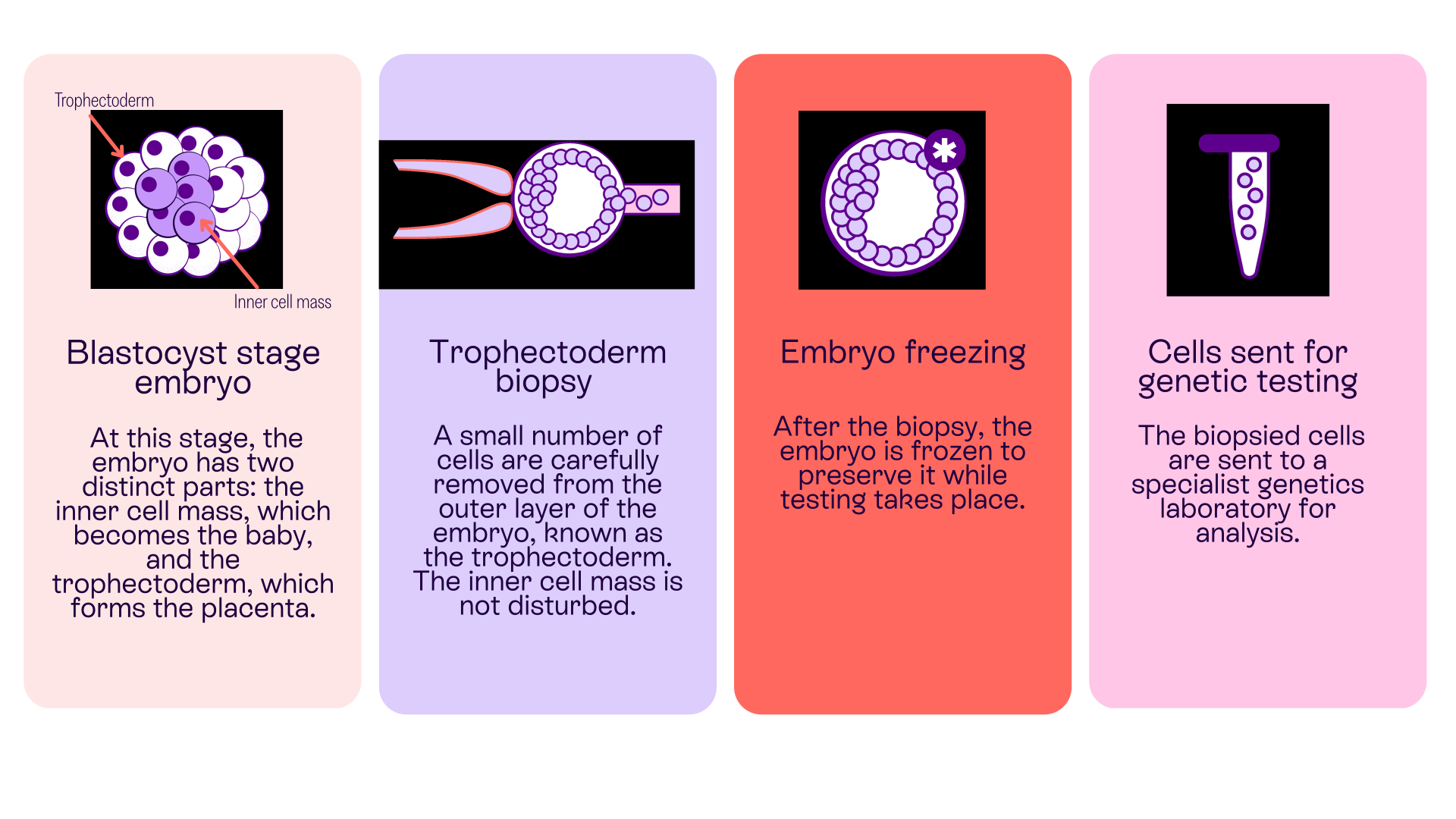
Once the cells have been sent to the genetics laboratory, the wait for results begins. When the results are ready, they are shared with you by either an embryologist or a genetic counsellor. Whatever the outcome, the results will be reviewed with your Care Fertility doctor, and the next steps will be discussed and planned together.
How PGT fits into an IVF cycle
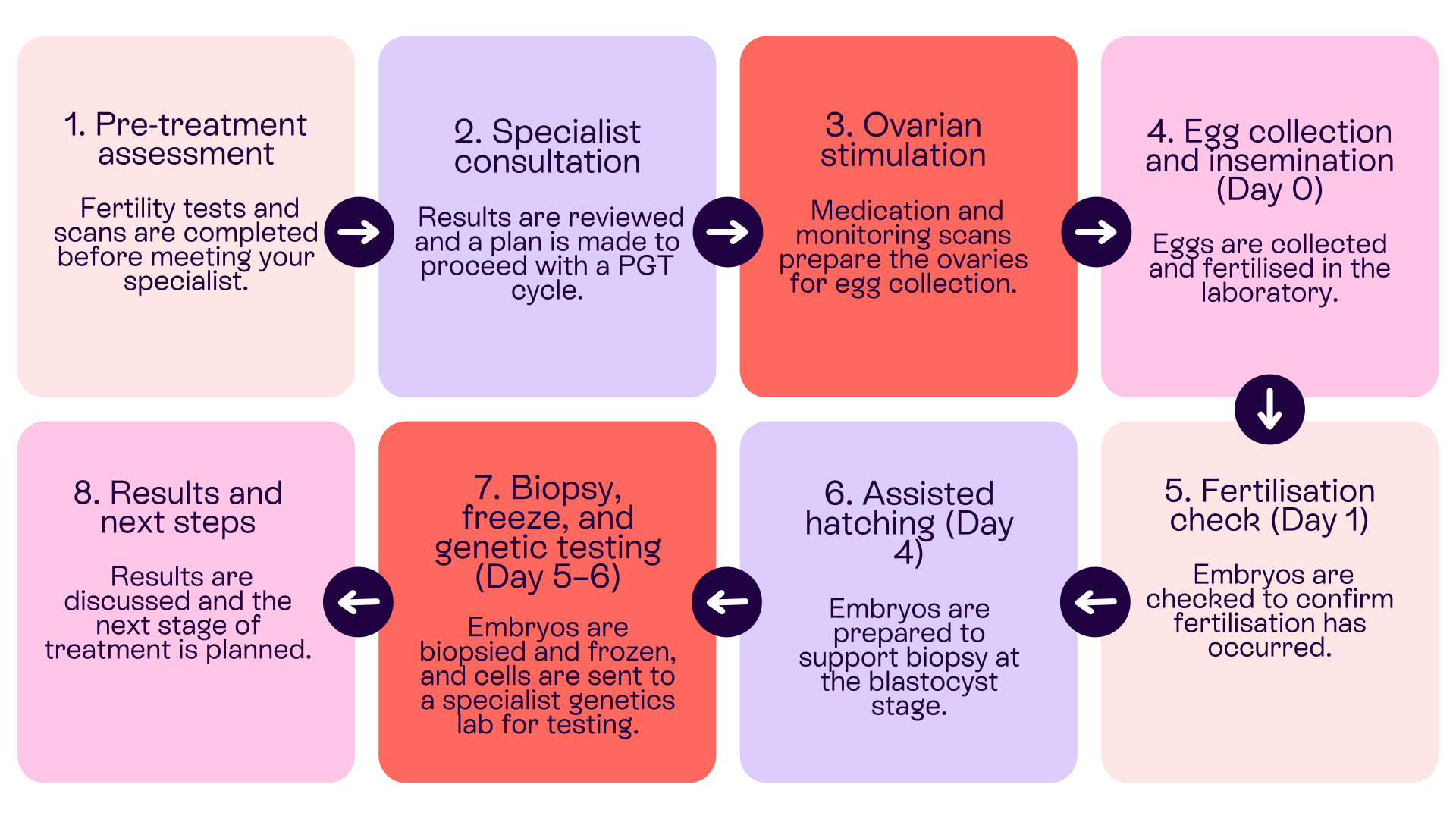
This illustration shows where preimplantation genetic testing (PGT) fits within a standard IVF cycle. While PGT adds a few extra steps in the laboratory, much of the early part of treatment is the same as IVF without genetic testing. Our embryology, genetics, and clinical teams work closely together throughout, keeping you informed at each stage and supporting you to plan next steps once results are available.
Are there any risks?
Risks associated with IVF treatment
PGT is carried out as part of an IVF cycle, so the general risks linked to IVF still apply. These can include side effects from medication, cycle cancellation, or not producing embryos suitable for testing. Your clinical team will talk through these risks in the context of your individual treatment plan.
Risk to the embryo
Embryo biopsy is considered safe, and most embryos tolerate it well. However, there is a small risk that the embryo would not survive the biopsy process. This risk is low, but it cannot be completely removed.
Risk that embryos may not reach biopsy stage
Not all embryos develop to day five or reach the stage needed for biopsy. This can be disappointing, especially after the physical and emotional investment of treatment, but it is something we always plan for and discuss in advance.
Risk that all tested embryos are affected or aneuploid
Sometimes, testing shows that none of the embryos are suitable for transfer. This can be very hard news to receive. If this happens, your Care Fertility doctor and embryology team will review the cycle carefully and talk through what options may be available next, whether that is another cycle, a different approach, or simply taking time to pause and reflect.
-1.png?width=290&name=HFEA%20National%20Average%20(3)-1.png)