

FIBROIDS & FERTILITY
Fibroids are common, and many people have them without any problems. But depending on their size, number, and where they are in the womb, they can sometimes affect fertility, treatment, or pregnancy. If they do, we’ll help you understand what they mean for your body, your treatment options, and your next steps.
Understanding fibroids and fertility
Fibroids are common, non-cancerous growths that can develop in or around the womb. Many people have fibroids without knowing, and they don’t always affect fertility. But for some, fibroids can cause symptoms such as heavy periods, pelvic pain, pressure, or difficulty getting pregnant.
If you’ve been told you have fibroids, or you’re worried they may be affecting your chances of conceiving, we’re here to help you understand what’s going on and what your options are.
At Care Fertility, we’ll look at your whole fertility picture, not just the fibroids. Before you see a doctor for your consultation, our patient enquiry team will book your fertility tests so your results are ready to review. That means your doctor can talk you through what your results show, how your fibroids may be affecting your fertility, and which next steps may be right for you.
How common are fibroids?
Fibroids are very common. Research published through the National Institutes of Health suggests that up to 70% to 80% of people with a uterus may develop fibroids by the age of 50. They are more common in women of African ancestry, who are also more likely to develop fibroids at a younger age and experience more severe symptoms. Many fibroids stay small and cause no symptoms, but some people experience symptoms such as heavy bleeding, pelvic pain, pressure, or fertility problems.
What are fibroids?
Fibroids, sometimes called uterine fibroids or myomas, are growths made of muscle and fibrous tissue. They can be very small, or they can grow large enough to change the size or shape of the womb. They are benign, which means they are not cancer.
Fibroids can grow in different parts of the womb, and where they sit matters, especially when you’re trying to conceive.
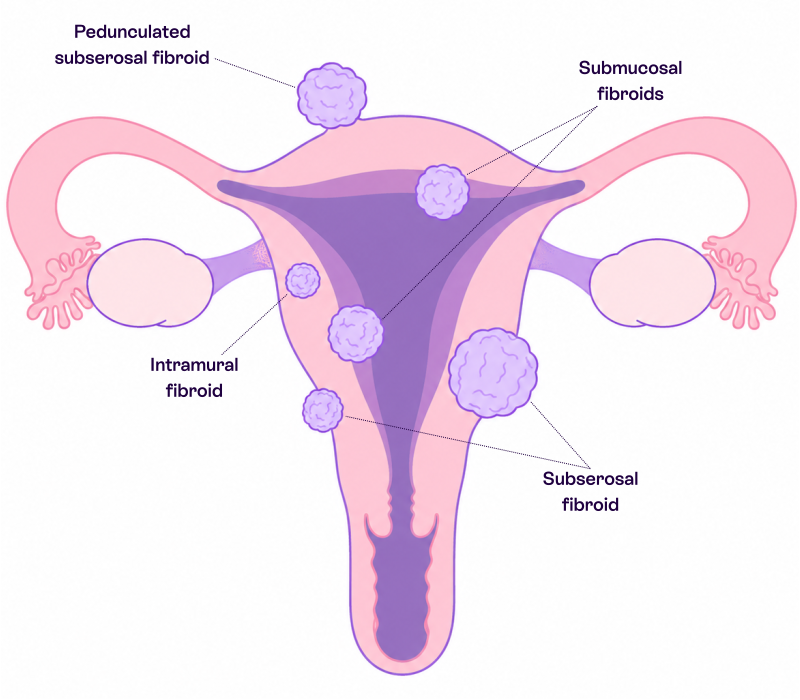
These grow within the muscle wall of the womb. If they become large, they can sometimes change the shape of the womb or affect the womb lining.
These grow on the outside of the womb. They are less likely to affect fertility, but they can cause pressure symptoms if they become large.
Symptoms of fibroids
Fibroids do not always cause symptoms. Some people only find out they have them during a scan, a fertility assessment, or pregnancy care.
When symptoms do happen, they can include:
If your periods are affecting your work, relationships, energy, or day-to-day life, it’s worth speaking to your GP. Heavy bleeding can sometimes lead to iron deficiency anaemia, which can leave you feeling tired, weak, or breathless.
Can fibroids affect fertility?
Yes, fibroids can affect fertility, but not always. It depends on their size, number, and position.
Fibroids may affect fertility by:
- Changing the shape of the womb cavity
- Making it harder for an embryo to implant
- Affecting the blood flow to the womb lining
- Blocking or putting pressure on the fallopian tubes
- Making the womb less suitable for a pregnancy to grow
- Making fertility treatment more complex in some cases
Submucosal fibroids, which grow into the womb cavity, are usually the biggest concern for fertility. Intramural fibroids may also affect fertility if they are large or distort the womb cavity. Subserosal fibroids, which grow on the outside of the womb, are less likely to affect your chances of conceiving.
The important thing is that fibroids are only one part of the picture. Age, egg reserve, sperm health, ovulation, fallopian tube health, and your wider medical history all matter too. That’s why we start with fertility testing before your doctor consultation, so we can give you advice based on your results, not guesswork.
Fibroids and pregnancy
Many people with fibroids have healthy pregnancies. But in some cases, fibroids can increase the chance of complications, especially if they are large, multiple, or close to the womb cavity.
Possible risks can include miscarriage, pain during pregnancy, problems with the baby’s position, premature birth, or needing a caesarean section. These risks depend on your individual circumstances, so your doctor will talk you through what your scan shows and what it may mean for pregnancy. The NHS advises speaking to a doctor about treatment options if you plan to have children, as some fibroid treatments can affect fertility or pregnancy.
How are fibroids diagnosed?
Fibroids are usually diagnosed with an ultrasound scan. This helps show how many fibroids there are, where they are, and how big they are.
At Care Fertility, your assessment may include a pelvic ultrasound scan to look at your womb, ovaries, antral follicle count, and womb lining. Depending on your situation, we may also recommend further investigations to understand whether fibroids are affecting the womb cavity.
If you’re starting fertility treatment with us, our patient enquiry team will book your tests before your doctor consultation. This means your doctor can review your results with you during the appointment and explain what they mean for your fertility and treatment options.
Treatment options for fibroids
Not all fibroids need treatment. If they are small, not causing symptoms, and not affecting the womb cavity, your doctor may recommend monitoring them rather than treating them straight away.
If treatment is needed, the right option depends on your symptoms, the size and position of the fibroids, and whether you want to have children.
Fertility treatment with fibroids
If fibroids are affecting your fertility, we’ll build your treatment plan around your results, your symptoms, and your goals.
Your options may include:
Pre-treatment fertility tests are often the best place to start. They help us understand your ovarian reserve, womb and fallopian tube health, and sperm health if you’re having treatment with a partner or sperm provider.
At Care Fertility, we arrange your tests before your doctor consultation, so your doctor can review your results with you. They’ll explain whether fibroids may be affecting your fertility and talk through your treatment options.
In vitro fertilisation, or IVF, may be recommended if fibroids are part of a wider fertility picture, such as concerns with sperm, egg reserve, ovulation, or fallopian tubes.
During IVF, eggs are collected and fertilised with sperm in the laboratory. An embryo is then transferred into the womb, where we hope it will implant in the womb lining and lead to a pregnancy.
Intrauterine insemination, or IUI, may be an option in some circumstances. This is usually when fibroids are not affecting the womb cavity, the fallopian tubes are open, and sperm results are suitable.
Your doctor will use your test results to decide whether IUI is appropriate for you, or whether another treatment may give you a better chance based on your overall fertility picture.
If fibroids may reduce the chance of implantation or make pregnancy riskier, your doctor may recommend surgery before starting or continuing fertility treatment.
Surgery does not guarantee pregnancy, but for some people it can improve the chances of conception or make treatment safer. Your doctor will explain the benefits, risks, and timing based on your results and plans.
When should I get help?
You should speak to your GP if you have symptoms of fibroids, especially if they are affecting your daily life, work, relationships, or wellbeing. The NHS also recommends seeking medical advice if painkillers are not helping.
You may also want to speak to a fertility specialist if:
-
You’ve been diagnosed with fibroids and want to understand your fertility
-
You’ve been trying to conceive without success
-
You’ve had recurrent miscarriage
-
You have heavy or painful periods and want to start a family
-
You’ve been told you may need fibroid treatment but you still want children
-
You’re planning IVF and want to understand whether fibroids could affect treatment
You don’t need to have all the answers before you speak to us. That’s what we’re here for.
What happens when you come to Care Fertility?
We’ll guide you step by step, so you know what is happening and why.
When you call us, our patient enquiry team will listen to what’s been happening and help book the right fertility tests for you. If you already know you have fibroids, let us know so we can make sure your assessment is planned properly.
Your tests may include blood tests, a pelvic ultrasound scan, and a semen analysis if you’re having treatment with a sperm provider. These tests give your doctor a clear picture before your consultation.
Your fertility specialist will review your results with you, explain how your fibroids may be affecting your fertility, and talk through your options. This might include monitoring, further investigations, referral to surgery, IVF, IUI, or another personalised plan.
Frequently asked questions about fibroids and fertility
Yes, many people with fibroids can get pregnant naturally and have healthy pregnancies. Whether fibroids affect your fertility depends on their size, number, and position.
Submucosal fibroids, which grow into the womb cavity, are most likely to affect fertility. Intramural fibroids may also affect fertility if they are large or distort the womb cavity. Subserosal fibroids, which grow outside the womb, tend to have the least impact.
No. Some fibroids do not need treatment before IVF. Your doctor will look at your scan, symptoms, medical history, and fertility results before advising whether treatment is needed.
Medically reviewed by: Dr Alison Richardson, Consultant Gynaecologist & Group Medical Director, Care Fertility
Last reviewed: June, 2026
You might also find helpful

After experiencing fibroids, PCOS, and IVF, Zainib and Mobeen share how they found their way back to treatment and parenthood.
Read More
Learn how fibroids can affect fertility, pregnancy, and treatment, and what your options may be if you’re trying to conceive.
Read More
Explore why early fertility care matters, and how better access to testing and support can help address health inequalities.
Read More