
Professor Simon Fishel
Co-founder of Care Fertility
Specialties:
- Reproductive Medicine
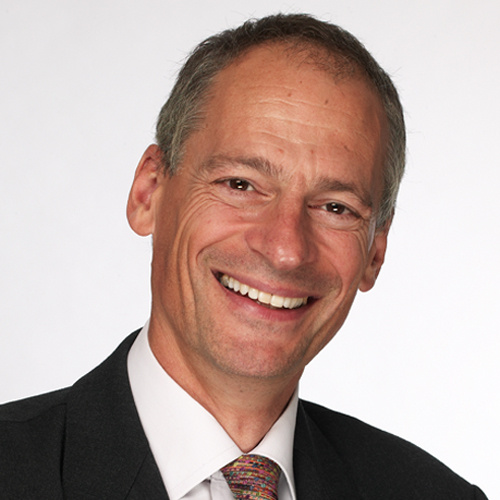
Professor Simon Fishel is one of the most recognised names in the history of fertility treatment. A physiologist, embryologist, and IVF pioneer, he played a leading role in the development of assisted reproductive technologies and co-founded Care Fertility in 1997. He was part of the original team behind the world’s first IVF clinic at Bourn Hall, working alongside Nobel Prize-winner Robert Edwards and gynaecologist Patrick Steptoe in the wake of the first IVF birth.
Training
Simon Fishel studied Physiology and Biochemistry at the University of Salford, graduating with first-class honours. He began his academic career teaching science before accepting a PhD position at the University of Cambridge.
While at Cambridge, he began working with Robert Edwards, who would later be awarded the Nobel Prize for his role in the development of IVF. Under Edwards’ supervision, Fishel completed his PhD and began to specialise in human embryology and reproductive science.
In 1978, he was appointed a Don at Churchill College, Cambridge and awarded a Beit Memorial Fellowship—one of the UK’s most prestigious biomedical research awards.
Career
Professor Fishel joined the team at Bourn Hall in the early 1980s, shortly after the birth of the world’s first IVF baby. He was appointed Deputy Scientific Director, working alongside a groundbreaking team that included Robert Edwards as Scientific Director, Patrick Steptoe as Medical Director, and John Webster as Deputy Medical Director. Together, they helped turn IVF from a revolutionary concept into a viable clinical treatment.
One of Fishel’s earliest innovations was the move from traditional test tubes to petri dishes with a layer of paraffin oil over the culture medium. This shift made IVF more practical and scalable—particularly as ovarian stimulation began to reliably produce multiple eggs.
In 1984, he co-authored a landmark study with Edwards and Chris Evans, showing for the first time that human embryos release the pregnancy hormone hCG. The research, published in Science, has since been cited widely and recognised as an early indication of IVF’s potential to contribute to stem cell science and regenerative medicine.
Fishel also played a key role in developing early sperm microinjection techniques. He was the first to demonstrate that successful intracytoplasmic sperm injection (ICSI) requires permanent immobilisation of the sperm tail—an insight that helped shape current approaches to male infertility.
In 1991, he introduced embryo vitrification to the UK. The country’s first birth from this ultra-rapid freezing technique followed in October 1992, helping to establish embryo freezing as a reliable option for fertility preservation and flexible treatment planning.
In recognition of his contributions, Professor Fishel was awarded an Honorary Fellowship from Liverpool John Moores University in 2009 for his outstanding work in the field of embryology and IVF.
His impact wasn’t limited to the lab. He co-developed the world’s first master’s degree in assisted reproduction technology at the University of Nottingham, and in 1987, he was part of the first World Health Organization team invited to introduce IVF to mainland China.
In 1997, he co-founded Care Fertility to provide science-led, personalised fertility care to NHS and private patients. He helped lead the development of Caremaps Ai—a time-lapse embryo selection tool designed to support better treatment outcomes.
Although he is no longer involved in Care Fertility, Professor Fishel’s influence continues through the clinic’s commitment to research, innovation, and putting patients first.