

Thinking about egg freezing can feel like a big step. For some, it’s about keeping options open. For others, it’s about taking back a bit of control over something that can feel uncertain.
Either way, you’re not alone. More people across the UK are exploring egg freezing than ever before, and for good reason.
Quick jump:
Why more people are choosing egg freezing
Egg freezing is no longer a niche treatment. It’s becoming part of how people plan their futures.
According to the Human Fertilisation and Embryology Authority (HFEA), egg freezing cycles increased from 2,567 in 2019 to 6,932 in 2023. That’s a 170% rise in just four years.
We’re also seeing strong growth in people aged 35 and over, alongside a sharp increase in those aged 30 to 37:
- Ages 30 to 34: from 1,200 cycles in 2022 to 2,000 in 2023 (+67%)
- Ages 35 to 37: from 1,500 to 2,300 (+53%)
Most of these cycles are elective. That means people are choosing to freeze their eggs to preserve future fertility, often funding treatment privately rather than through the NHS.
The egg freezing process step by step
The egg freezing process is carefully planned to give you the best chance of preserving healthy eggs for the future.
It happens in a few clear stages, from understanding your fertility through to collecting and freezing your eggs. We’ll guide you through each step, keeping things simple and making sure you feel informed and supported along the way.
How long does egg freezing take?
From start to finish, one egg freezing cycle usually takes around 2 to 3 weeks once treatment begins.
If you include testing and consultation, the full journey can take a bit longer, but it’s still relatively quick in the grand scheme of things.
Some people choose to have more than one cycle to increase the number of eggs stored.
How many eggs do you need?
You might hear us talk about a “golden number” of around 20 eggs.
That’s because:
- Not every egg collected will be mature
- Not every egg will survive freezing and thawing
- Not every egg will fertilise or develop into an embryo
So, we aim to collect enough eggs to give you the best possible chance in the future.
That said, everyone is different. Your age, ovarian reserve, and how your body responds to treatment all play a role.
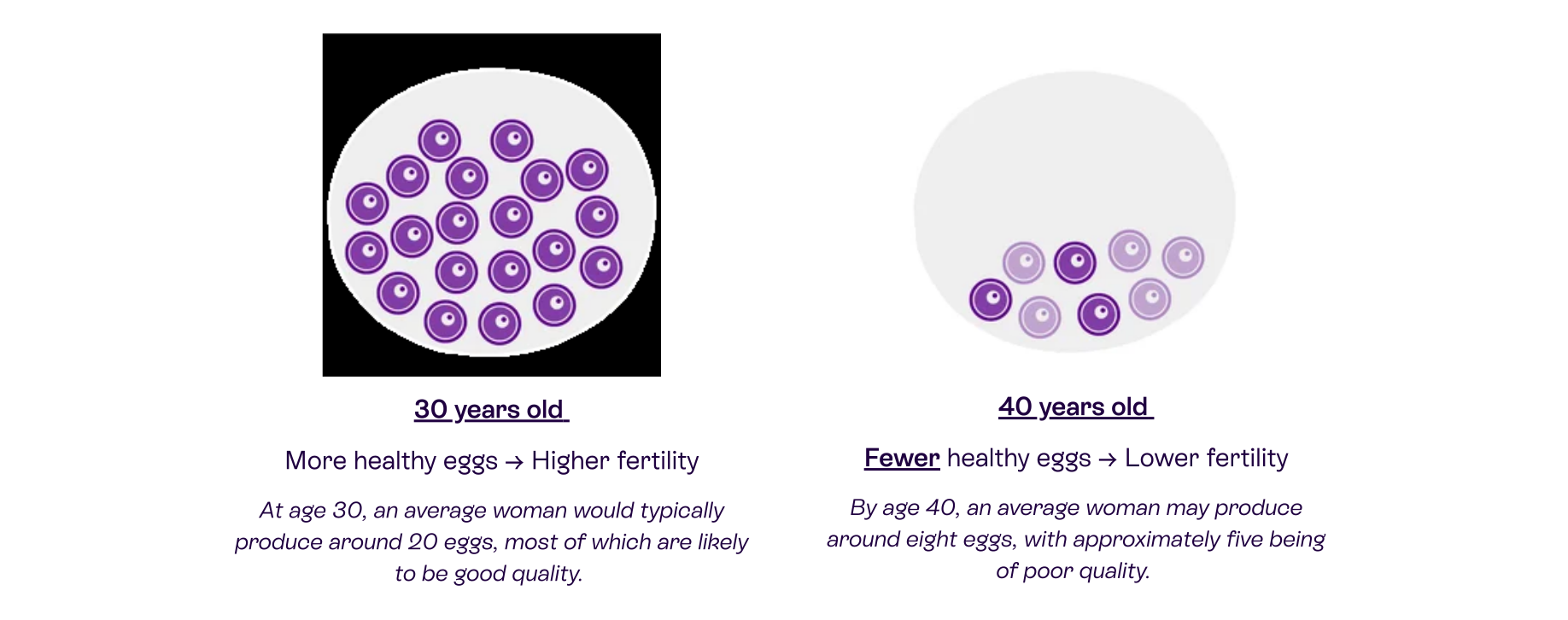
Does age matter?
In short, yes.
Egg quality naturally declines with age. Freezing eggs at a younger age, particularly under 35, often gives a higher chance of success later on.
In fact, eggs frozen under 35 can offer better chances than trying to conceive naturally at an older age.
What are the outcomes?
Egg freezing is about giving yourself options, not guarantees.
Success depends on several factors:
- Your age when the eggs are frozen
- The number of eggs stored
- Your overall fertility health
When you’re ready to use your eggs, the process continues with IVF, where the eggs are thawed, fertilised, and transferred.
Is egg freezing right for you?
There’s no one size fits all answer.
You might be considering egg freezing if:
- You’re not ready to start a family yet
- You want to focus on career, relationships, or personal goals
- You’re thinking ahead due to medical reasons
What matters most is having clear, honest information so you can decide what feels right for you.
Taking the next step
Egg freezing isn’t about rushing a decision. It’s about understanding your options and choosing what works for your life.
Starting with a fertility assessment can give you that clarity. From there, we’ll guide you through everything, step by step, at your pace.
If you’re ready to explore your options, you can call us on 0800 564 2270 or click here to get in touch. We’re here to support you, whenever you’re ready.