

Egg freezing is becoming part of how many people plan for the future. It offers the option to preserve fertility at a time when starting a family may not feel right yet.
The question of timing often sits at the centre of that decision. Age plays a significant role in how effective egg freezing is, but it is only part of the picture.
Fertility is influenced by both age and your individual biology. Some people may have a higher or lower ovarian reserve than expected for their age. Lifestyle factors like smoking, medical treatments such as chemotherapy, a history of ovarian surgery, or a family history of early menopause can also affect egg numbers.
Understanding both your age and your personal fertility is what allows you to make a clear, informed decision about egg freezing.
Quick jump:
Understanding your egg supply and fertility
Women are born with all the eggs they will ever have, and this supply naturally declines over time.
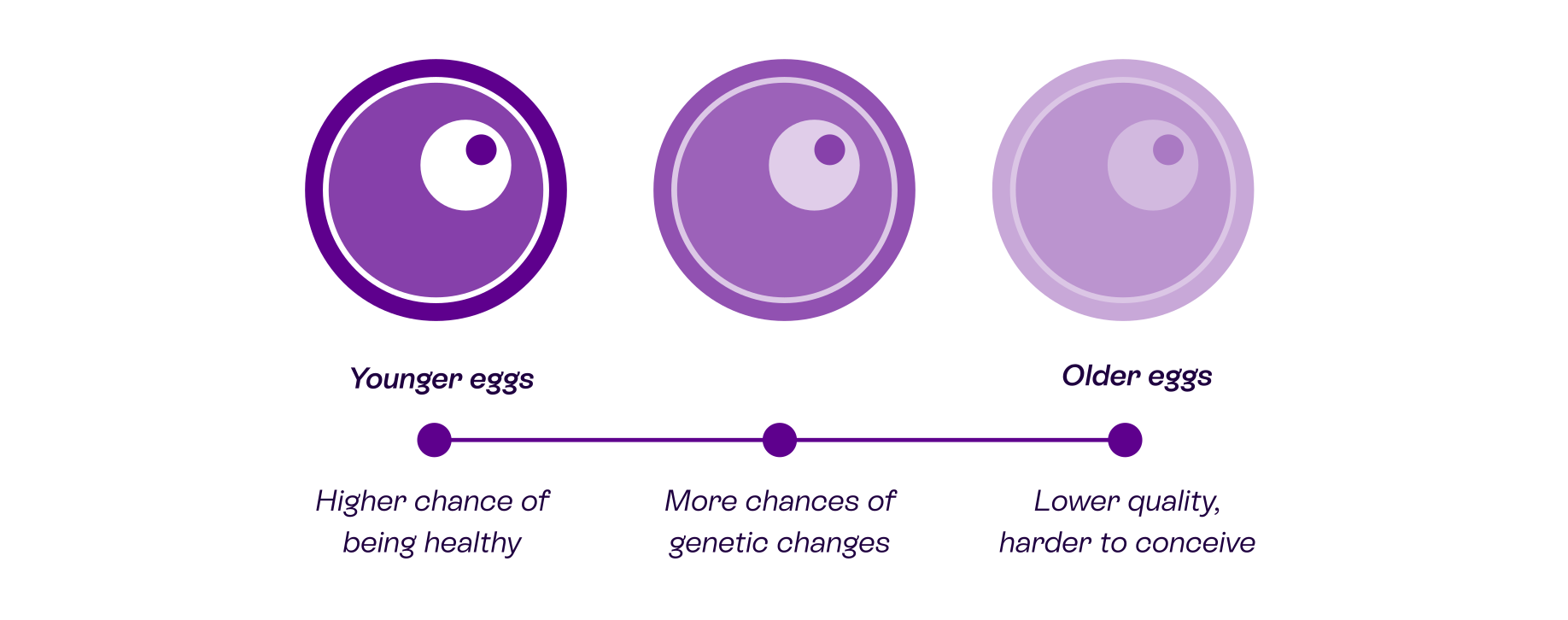
Fertility naturally changes with age. Most people will notice a gradual decline from their early 30s, with a more noticeable drop after the mid-30s. By the time you reach 40, egg numbers are often much lower than they were at birth, typically less than 10%, and egg quality has also declined.
This means that both the number of eggs available and how likely they are to develop into healthy embryos change as you get older.
Age is important, but it does not tell the full story. Some people may have a good number of eggs, even later on, but egg quality still tends to decline over time, which can affect the chances of pregnancy. Others may notice changes earlier than expected.
What is the best age to freeze your eggs?
There is no single “perfect” age, but there are clear patterns in how outcomes change over time.
Why age matters for egg freezing success
Freezing eggs at a younger age allows those eggs to retain the quality they had at the time they were collected.
If eggs are frozen before the age of 35, the chances of success later on can be higher than trying to conceive naturally at an older age.
This is because it’s the age of the woman when the eggs are collected that matters most, rather than her age at the time of embryo transfer. In simple terms, eggs frozen at a younger age retain that younger quality, even when used years later.
How many eggs should you freeze?
You may hear that 20 eggs is the ‘golden number’.
This is because not every egg collected will be suitable for freezing, not every egg will survive thawing, and not every egg will develop into an embryo after fertilisation.
Having around 20 eggs can improve the overall chance of achieving a pregnancy in the future. For some people, this may take one cycle, while others may need more.
It’s also important to understand that egg quantity and quality work together. Younger people may need fewer eggs because those eggs are more likely to be of good quality. As age increases, egg quality tends to decline, so a higher number of frozen eggs may be needed to give a similar chance of success.
Egg freezing in the UK: what the data shows
Egg freezing is a growing area of fertility treatment in the UK.
According to the Human Fertilisation and Embryology Authority (HFEA), treatment cycles increased from 2,567 in 2019 to 6,932 in 2023, representing a 170% rise.
The largest increases have been seen in people aged 30 to 37, showing greater awareness and earlier planning.
Most egg freezing cycles are elective and funded privately, with people choosing to preserve their fertility for the future rather than for medical reasons.
Understanding your fertility
If you are thinking about egg freezing, the first step is understanding your current fertility.
At Care Fertility, tests are carried out before you meet a doctor. This means your results are ready to be reviewed and explained during your consultation.
Your assessment includes:
- A blood test to measure hormone levels, including Anti-Müllerian Hormone (AMH), alongside baseline health markers such as vitamin D, full blood count (FBC), HbA1c, and thyroid-stimulating hormone (TSH). These help us understand your ovarian reserve and check that your body is in a good position to respond to treatment
- An ultrasound scan to assess your ovarian reserve
These tests give a clear picture of both your fertility and your overall health, so any factors that could affect treatment can be identified early.
Once your results are available, you will have time with a fertility specialist to talk through what they mean for you and what your next steps could look like.
After your consultation, you will receive a summary of your results, treatment options, and cost estimates through your companion app. If you decide to move forward, you will complete viral screening blood tests and consent forms before attending a treatment planning appointment with a nurse to go through your personalised plan. Medication is ordered through your companion app and supplied by Stork.
Learn more about our testing bundle
Making the decision that is right for you
Egg freezing is a personal decision, and timing is one part of a bigger picture.
Freezing eggs in your 20s or early 30s can offer more flexibility and higher chances of success. At the same time, understanding your own fertility gives you the clarity to decide what feels right for you.
If you’d like to explore egg freezing, or simply want to talk things through, get in touch with us today. We’re here to help you understand your fertility and your options, on your terms.