

There is a lot of pressure wrapped up in conversations about fertility and age. Some of it comes from well-meaning family members, some from social media, some from headlines, and some from that quiet internal worry that starts to get louder when you are thinking about your future.
It can feel as though everyone has an opinion on when you should start trying, when you should ask for help, or whether you have left things too late. That kind of pressure rarely helps. What does help is clear information, explained with care, so you can understand what age means for fertility without feeling frightened by it.
Age does matter in fertility, especially when we are talking about egg number and egg quality, but it is not the whole story. Your fertility is personal, and the right support should help you understand your own situation rather than make assumptions based on your age alone.
Quick jump:
- Why age matters in fertility
- Egg quality, chromosomes, and miscarriage
- What age can and cannot tell you
- What about sperm and age?
- When should you ask for help?
- How age affects IVF success
- Why personalised advice matters
- Moving from worry to information
- Taking pressure out of the conversation
- The takeaway and next steps
Why age matters in fertility
For women and people with ovaries, fertility changes with age because both the number and quality of eggs reduce over time. This is a natural biological process, not something caused by stress, contraception, lifestyle choices, or anything you have done wrong.
The Mayo Clinic explains that egg quantity and quality begin to decline with age, and that this decline becomes more noticeable from the mid-30s, which can make conception more difficult and increase the chance of miscarriage.
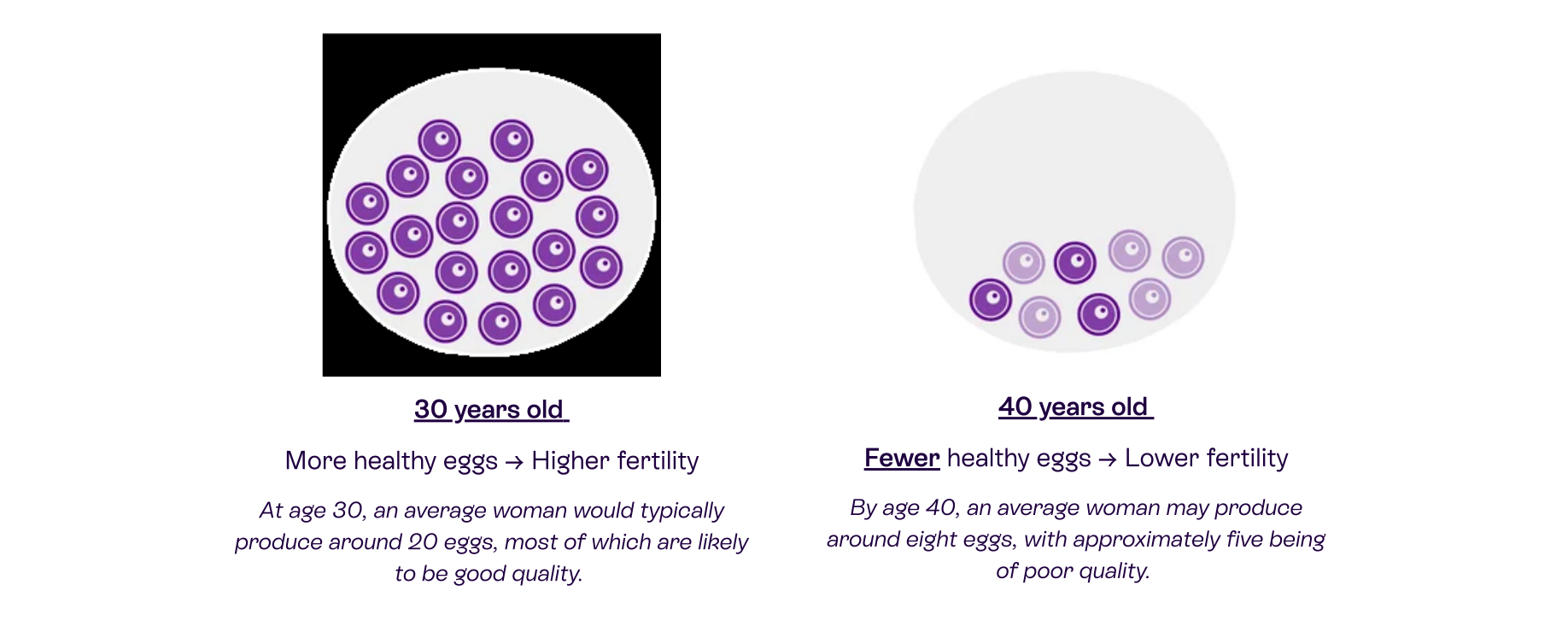
That can be hard to hear, especially if you are not ready to start a family yet, or if life simply has not lined up in the way you expected. But it is important to separate a medical fact from a personal judgement. Fertility changes with age, but that does not mean your options disappear overnight, and it certainly does not mean you should be made to feel guilty for the timing of your life.
Egg quality, chromosomes, and miscarriage
One of the main reasons age affects fertility is linked to chromosomes. Chromosomes carry genetic information, and an embryo usually needs the right number of chromosomes to develop as expected.
As eggs get older, chromosome division is more likely to go wrong. This means an embryo may have too many or too few chromosomes, which is known as aneuploidy. Many early miscarriages happen because the pregnancy has a chromosomal difference that means it cannot continue, and this is not caused by anything someone did or did not do. Care Fertility’s patient information on pregnancy loss explains that chromosomal abnormalities are the most common cause of miscarriage, particularly in early pregnancy, and that the chance of chromosomal abnormalities increases with age.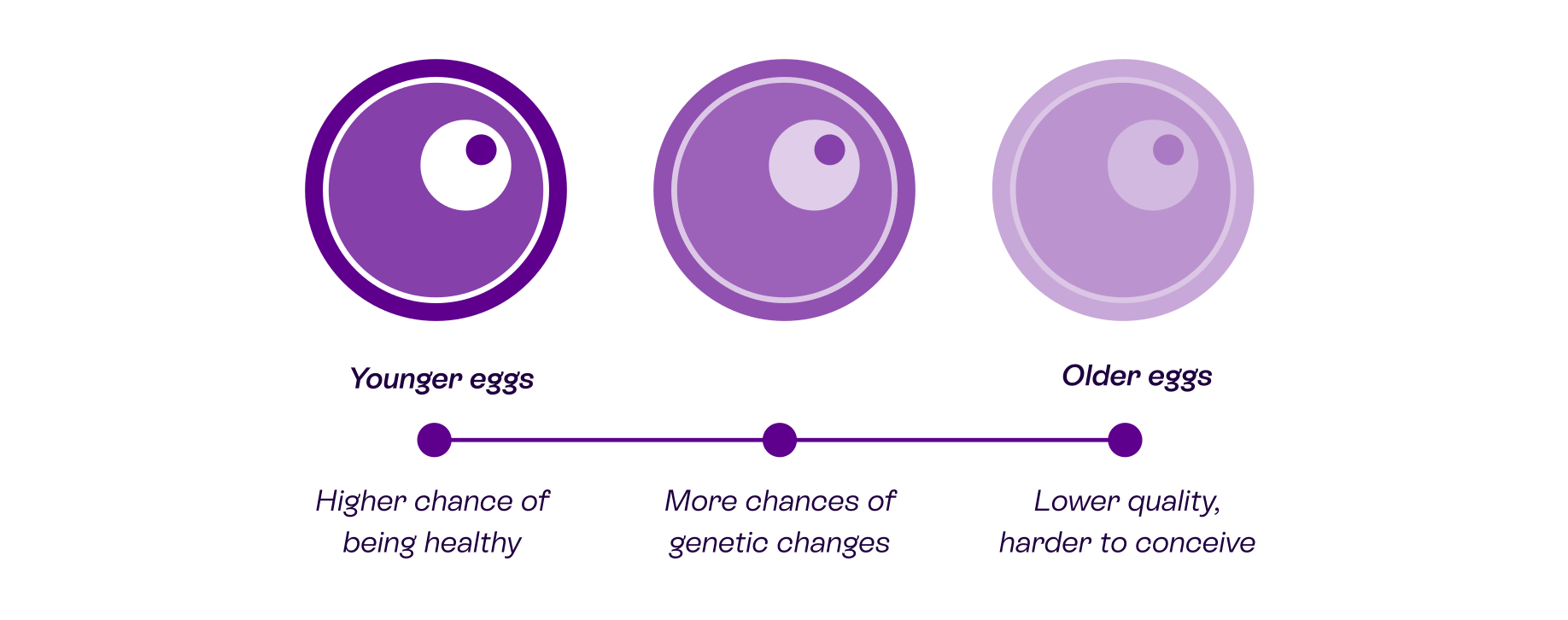
This is one of the reasons we talk about age carefully. It is not about making people feel anxious, and it is not about creating a deadline. It is about helping you understand why fertility changes happen, so any decisions you make are based on facts rather than fear.
What age can and cannot tell you
Age can tell us something useful about fertility, but it cannot give a complete picture on its own.
Two people of the same age can have very different fertility test results, medical histories and treatment needs. Ovarian reserve, sperm health, menstrual cycle patterns, fallopian tube health, previous pregnancies, endometriosis, PMOS, fibroids, thyroid function, BMI, lifestyle factors and genetics can all play a part.
This is why fertility testing matters. It gives your doctor more than a date of birth to work with. At Care Fertility, tests are completed before your consultation, so your doctor has a clearer picture from day one and can talk through your results, your options and what may be most appropriate for you. The pre-treatment bundle includes key tests such as AMH, thyroid function, vitamin D, HbA1c, a full blood count, a pelvic ultrasound scan where needed, and semen analysis where a sperm provider is involved.
Having this information upfront can make the consultation more useful, because it becomes a personalised discussion rather than a general chat about fertility.
Learn more about our in-depth testing bundle
What about sperm and age?
Fertility conversations often focus heavily on female age, but sperm health matters too. Sperm count, movement and shape can all affect the chance of conception, and semen analysis helps us understand whether there may be a male factor involved.
Care Fertility’s fertility assessment information explains that semen analysis looks at sperm count, motility and morphology, which means the number of sperm, how well they move, and their size and shape.
This is another reason it can be unhelpful when fertility pressure is placed only on one person. If you are trying to conceive as a couple, it is usually best to understand both sides of the picture.
When should you ask for help?
The NHS advises speaking to a GP if you have not conceived after one year of trying and seeking advice sooner if you are aged 36 or over, or if you already know there may be a fertility issue.
You may also want to ask for advice earlier if your periods are irregular or absent, if you have known reproductive health conditions such as endometriosis or PMOS, if you have had pelvic surgery or infection, or if you are planning a route to parenthood that involves donor sperm, donor eggs, surrogacy, or treatment as a solo parent or same-sex couple.
Asking for help does not mean you are committing to treatment. It means you are getting information, and sometimes that information is enough to reduce the worry that comes from not knowing.
How age affects IVF success
IVF can help many people build their family, but it cannot fully reverse the effect of egg age. That is why age is considered when doctors talk about treatment options and likely outcomes.
The HFEA’s 2023 UK fertility treatment report shows that, for IVF using fresh embryo transfers and patients’ own eggs, pregnancy rates per embryo transferred were highest in patients aged 18 to 34, at 41% in 2023. The rate was 34% for patients aged 35 to 37, and 25% for patients aged 38 to 39.
These figures are useful, but they are averages across large groups of patients. They cannot predict exactly what will happen for you. Your own chances may be affected by your test results, sperm health, previous treatment history, embryo development, wider health, and the treatment plan recommended by your doctor.
Take a look at our success rates
Why personalised advice matters
There is no single fertility timeline that fits everyone. Some people want to try naturally for a while before asking questions, some want to understand their fertility before they are ready to start a family, and some already know they need support because of their medical history, relationship status or route to parenthood.
A fertility assessment can be a helpful first step if you want to understand more about your reproductive health. It may include blood tests, a pelvic ultrasound scan, and semen analysis if needed, followed by time with a fertility specialist to talk through what the results mean. Care Fertility’s fertility assessment makes it clear that you do not need to be ready to start a family now, as the appointment is about getting reliable information so you can make decisions in your own time.
That distinction matters because fertility information should not push you into decisions before you are ready, but it can help you understand whether there is anything worth acting on sooner.
Moving from worry to information
It is very easy for fertility worries to become bigger in your head, particularly when you are trying to make decisions around relationships, career, finances, health, family expectations and timing. Many people carry those worries quietly for months, or even years, before speaking to anyone.
Testing can help turn that uncertainty into something more concrete. It may not answer every question, and it cannot guarantee what will happen next, but it can give you a clearer starting point.
At Care Fertility, the process is designed so your results are ready for your consultation with a doctor. After your consultation, you receive a summary of your treatment options and cost estimates through our treatment companion app, Salve. If you decide to move forward with treatment, you will complete viral screening blood tests and consent forms via EngagedMD before attending a treatment planning meeting with a nurse to discuss your treatment plan and medication.
Taking pressure out of the conversation
There is a difference between being honest about age and using age to create fear. A good fertility conversation should help you understand the facts and your options moving forward.
If you are in your 20s or early 30s and thinking ahead, you may simply want to understand your fertility and what your options could look like later. If you are in your mid-30s or older, you may want clearer guidance sooner, especially if you know you would like a family in the future. If you are already trying to conceive, you may want to know when to investigate and what support is available.
The takeaway
Age matters in fertility, and it is right to be honest about that, but it is only one part of your story. The right support should help you understand where you are now, what options are open to you, and what feels manageable for your life, without adding more pressure to an already personal decision.
If you’re worried about your fertility, or you’re not sure when to ask for help, we’re here to talk it through with you. Call us on 0800 564 2270 or click here to book to speak to our friendly team of experts.
-1.png?width=290&name=HFEA%20National%20Average%20(3)-1.png)