
When Ciaran and Jen got married, they already suspected they might need some help to start a family. Like many couples, they assumed any issue would be down to Jen’s irregular cycles, until a routine semen analysis changed everything. Their first treatment took place on the NHS at another clinic, and years later a move north brought them to Care Fertility Sheffield. What followed was close to a decade of treatment, two very different experiences of care, and a journey that would eventually lead Ciaran to support thousands of other men going through the same thing.
Here, Ciaran tells their story in his own words.
If it happened, it happened
Me and Jen have been together a long time. After about a year and a half, we realised we wanted to be together and I proposed. We knew we were going to get married, so we weren’t being too careful. If it happened, it happened. We were quite relaxed about it, and we kind of kept on that path until we got married.
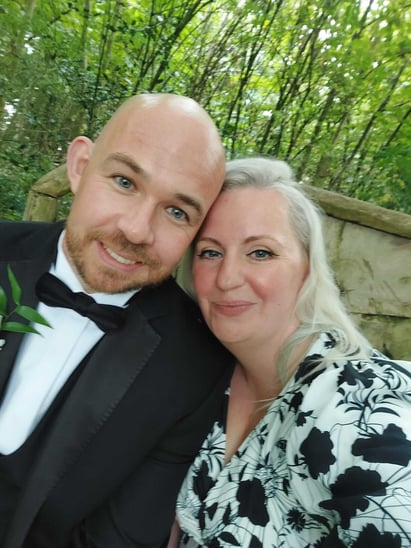 Ciaran and his wife, Jen.
As soon as we got married, we had the suspicion that Jen had polycystic ovaries (now known as Polyendocrine metabolic ovarian syndrome) because she didn’t have regular cycles. So, the thought process was there that we might need a bit of additional support. We literally got married in the December and went to the doctors in the January, and they started doing investigations on her. That went reasonably well, as it would in the NHS, in terms of it took a bit of time.
Six to eight months after she started all the investigations, they said, yes, you’ve got polycystic ovaries and we’d like to put you on some Clomid to get you ovulating. But just before we do that, we’d like to test Ciaran. The time frame is really important here. It had taken them six to eight months to get to me, because in our minds the issue was that Jen wasn’t having regular cycles.
“There’s not much we can do for you”
I went and gave the sample. Most unusual experience of a man’s life, I think, giving that first sample. But I did it. A couple of weeks later, I was called back into the consultation room. They turned to Jen and said, look, we can get you ovulating. And then they turned to me and said, but there’s not much we can do for you, Ciaran.
That’s how I found out about my infertility, in that consultation, very bluntly. I had a bit of a negative response because I didn’t understand what they were talking about, and there was a bit of backtracking to try and figure out what it could have been. I did a lot of weightlifting, so there were questions about steroids and things like that, but I’d never used performance enhancing drugs.
They said there was nothing medically they could do. Think about your exercise, how you’re exercising, think about your diet. The old famous Mediterranean diet was dropped in. Look at your sleep patterns, stop drinking. Also stop smoking. I don’t smoke. It doesn’t mean anything to me. I was really defensive in that moment because I’d just received this information and I didn’t know what to do with it. It was all very generic. I wasn’t given anything specific, and I wasn’t even given any numbers. It was just, there’s not much we can do, Ciaran, try and improve your lifestyle and come back in three months and give another sample.
When I came back in three months, that second sample was worse than the first one.
Part of that was because I was so overwhelmed, I just buried my head. I’ve got a background in sports science, and you’d think, well, surely you would use your common sense and knowledge to at least make some changes. But being given a diagnosis of male factor infertility isn’t something that you just go, all right, that’s an easy fix. As a man, it hits you harder than probably anything ever could in terms of your identity as a man. There’re not many things on par with it.
So, I spent the next three months burying my head, but also convinced they’d got it wrong. I was like, I’m going to go back, and this one will be fine. And it came out worse. I can smile about it now because I’m on the other side of the fence, but at the time it was incredibly difficult, emotionally and psychologically. I didn’t know what to do with it.
“Men have a tendency just to hold on to things”
I didn’t want to speak to anyone about it until I’d processed it. But I also didn’t feel like I could. I think that’s common amongst men. It’s something that’s so personal. You can’t exactly just open up about it during a game of football or down the pub with the boys. Men have a tendency just to hold on to things.
Part of that was I was trying to protect Jen. Jen’s my wife, and I didn’t want her to feel like she suddenly had to support me. There was a lot of guilt around that, especially when that second analysis came in. I went from blaming others, saying they’ve got it wrong and burying my head, to, oh, this is a real thing. Now I felt guilty because I couldn’t give Jen the one thing she truly wants, and that’s children.
That rolled into a darker story in some ways. I started to think about my position as a man and what worth I had. It’s a common thing among men. I’ve talked to thousands now, and that helplessness, that guilt that comes with a diagnosis of male factor, is hard to shoulder. It’s not easy just to open up.
“It’s all gone Pete Tong”
There was no additional guidance after that second test. We were put straight on to ICSI treatment on the NHS. That was the pathway. But even that wasn’t explained right initially. I thought ICSI was IVF, but they’re two separate things, aren’t they? You’ve got IVF, where you put an egg and a sperm together and just let them do their thing, or you’ve got ICSI, where you’re injecting the egg with the sperm. I wasn’t even sure what we were doing.
Part of that would have been because I just buried my head. There was shame there. So, I have to put my hand up and say I didn’t engage in it as much as I should have, because I was trying to protect myself and I was also trying to help Jen through something that was extremely challenging.
Our first cycle was fresh, and we were lucky enough to fall pregnant. Then within a few weeks, there was a negative test, because Jen was very obsessed about testing. We’d told everyone. When I say everyone, we told grandparents and things like that. Honestly, it was one of the hardest discussions ever; to then have to ring them two weeks later and say it’s all gone. It’s all gone Pete Tong.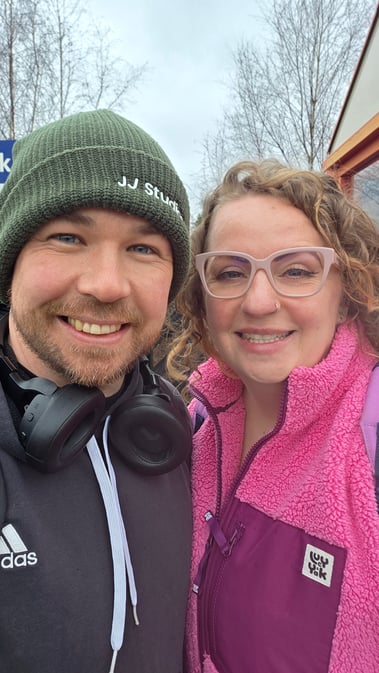
Ciaran and Jen enjoying some time outdoors.
We just started another cycle. There was no additional support, and that was hard. That was really hard.
We had some embryos left, so we had a frozen cycle, and that didn’t take at all. There was nothing from it. I think that’s one of the biggest things about fertility treatment. There’s a belief that it’s a magic cure, that it’s just going to happen. Surely if you get an embryo and you put it in the right place, it’s going to grow. Well, that embryos got to be right. I know that now. You have to experience it to understand it. It’s not a case of, we’re doing ICSI and it’ll be fine.
Even thinking about it now, I get that feeling in my chest. I can still remember just thinking, oh, what’s gone wrong? I think a lot of people ask that, male or female. What went wrong? What more could I have done? And the truth is, quite often there’s nothing else you could have done.
“Two people just travelling along next to each other”
For that second cycle, me and Jen both agreed that we wouldn’t tell anyone. Was it the right decision? I don’t know. Did it put more burden on our shoulders? Yeah, it did, because we didn’t have family to talk to. We kept it to ourselves. Was that one of the steps that took me down the road that I did? I don’t know. But it’s past now, we can’t hang on it. And it’s okay to make those decisions for yourself during treatment. Sometimes you don’t know if they’re the right ones. You’ve just got to hope.
I think that’s even more important for men. Men often feel like they must keep everyone else happy. There’s a certain role I believe I had to play as a man, as a husband, because at certain times Jen needed my support more than I needed hers. But there were also times when I needed her support, and rather than saying, this is what I need, I just shut up. I didn’t say anything. And that just built and built and built.
During that second cycle, we were two people just travelling along next to each other. To be fair, that partly carried on for the next fresh cycle as well.
“The longest five-hour journey we’ve ever had”
On our second fresh cycle, we fell pregnant. We got to the seven-week mark and had a scan. There was a heartbeat. Amazing. Everything was going really well. Nine-week scan, there was a heartbeat. And then on Boxing Day, Jen miscarried.
We’d prepared for Christmas thinking, this is it. We’re so close to that 12-week mark, nothing can go wrong now. But it did. We were living in Bedfordshire at the time, and we were due to go down to my mum’s in Devon for a family party. It was the longest five-hour journey we’ve ever had, especially when you have to pull over at the services because your wife needs to use the toilet because she’s miscarrying. What we should have done is stayed at home. But we hadn’t told anyone, and there was part of us that wanted to be with family because it was Christmas.
When we got there, Jen went upstairs and spent most of the day crying, as you would, and I was up and down trying to keep the family happy while all I really wanted was to be with my wife. The family must have known something was going on. I just said, oh, she’s not well. Over a few days, we kind of processed it.
I still remember standing in the bathroom before we left. I had this feeling of; I just want to take all this away from her. And this horrendous guilt of, she’s going through this because of me. That was a significant step in the breakdown of my own mental health.
It took time to repair that and to continue our relationship, because it had started to fracture. Not to the point where I was going to walk out the door or she wanted me to leave, but we were struggling to communicate. Part of that was I wasn’t being as open as I should have been. In that moment, she did need the support, and I gave her as much as I could. But afterwards, we should have sat down and really picked it apart, and we didn’t. It was, it happened, let’s move on, let’s do another frozen cycle. And that didn’t take at all.
By then I just couldn’t cope anymore. I’d had enough.
“It was time to get off that fertility roller coaster”
We’d had two fresh cycles and two frozen, and my mental health had kind of dropped off the edge. It’s taken me a lot of time to get to the point where I can discuss it, but I got to the point where I was suicidal. I didn’t know how to fix how I felt. I couldn’t take the pain away. When you’re living with it constantly, you get up in the morning and you’ve got the heaviness on your chest, you go to work and you can’t focus. All these things were just spiralling. I ended up being off work, isolated on my own. I just didn’t want to do anything. The only reason I didn’t follow through was because I couldn’t do it to Jen. That’s the real truth of it.
Jen came home one day to find me in a mess on the floor, and it all just poured out, everything I was feeling. We made the decision then, in that moment, to pause. We knew the next cycle would be our last chance, and I had to be in a position where I was comfortable if it didn’t work. At that moment in time, I don’t think I would have been. That’s the truth.
So, we stepped right off. For a couple of weeks, we didn’t do anything fertility-wise. We just existed together. Then we sat down and had an honest conversation about what we needed to do. There was a distinct moment where we started talking more, and it changed everything.
I thought about how I could take back control of my mental health, and about those lifestyle things that had been suggested. I used my background in sports science and my personal training qualifications to put my own little programme together, and I ran it for 18 months. The aim wasn’t ultimately to improve my fertility. It was just to optimise myself as a man, because I didn’t feel like one. Jen jumped on that train with me and we did it together. For 18 months, me and Jen just lived following these simple lifestyle rules.
It was really successful. My sperm count went up to 4 million, where previously it was at 1,500, which is quite a significant change. And the viable sperm they could use went up to over 4%, where before it was below 1%. I also had counselling through that time and became more open to talking about how I felt. It didn’t take everything away, but it put me in the right position.
After 18 months, I was like, okay, I’m ready. We can do this again. And we had a plan if it didn’t work. That plan probably would have been to adopt, because Jen’s sister is adopted. We knew that was a viable thing for us. We’d seen the wonderful life she’d had, so we could give someone a life like that.
If you’re struggling or having thoughts of suicide, you don’t have to face it alone. You can call Samaritans free, any time, day or night, on 116 123, or visit samaritans.org.
“She opened the door at the right time”
We went for a fresh cycle and decided to put two embryos in. We were a bit stubborn. We were like, no, we’re having two in. If this is the last go, we’re doing it. And we got a positive pregnancy test after the two-week wait.
At seven weeks, there were two heartbeats. At nine weeks, there were two heartbeats. Then we went back for the 12-week scan and there was only one. You could still see the other embryo, and what became apparent was that one had died in the few days leading up to the scan. So, we’d had another miscarriage.
It was a double-edged sword. We still had one, but we’d lost one. We were so happy we could continue on this journey, but we were holding instant sadness for the one we’d lost. In that split moment, all my fears and feelings came rushing back.
After the scan, Jen got up, sorted herself out and went into the room opposite the scan room. There was a nurse in the corridor. She wasn’t in the scan room or anything, but obviously it had got out that something had happened. She stopped me and asked me if I was okay.
I always talk about this. When you give support to a man, continuously open the door, because he won’t automatically walk through it. She asked me if I was okay, and she opened the door at the right time. I just said no, and I burst into tears. She gave me a hug and straightened me up. She gave me that bit of time where I was allowed to be Ciaran, just for a split second, and then I could go in and support Jen as I needed to. She did what my mum would have done. It was needed, but I had to be prepared to walk through that door.
For men it’s so hard, especially in a vulnerable moment like that.
Then we went into that room, and the conversation was, look, the other baby looks really healthy. We don’t know what’s going to happen. There are two options. It could trigger something else, like a full miscarriage, or you just ride it out and see what happens. So that’s what we did.
There was a lot of fear and unknown, constantly looking for signs. The key was getting to our 20-week scan, so every week we were like, tick, tick, tick. Even going for that scan there was fear, because what if something else had gone wrong? There were no signs of it. Jen was growing, baby was growing. But you just can’t help having that fear. And as a man, I didn’t want to project that, because I didn’t want Jen to feel I was afraid.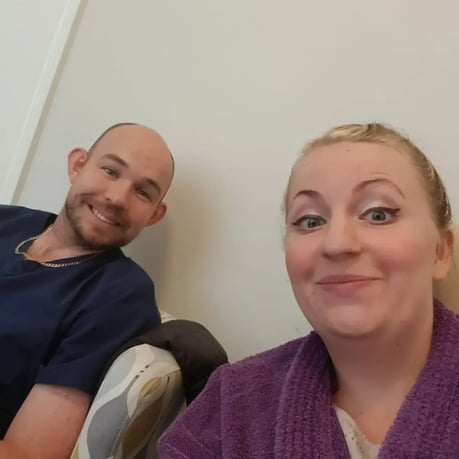
Ciaran and Jen
Baby was growing well, and the other baby had been absorbed. They called it disappearing twin syndrome. I’d never heard of it. I spent the next three days Googling it.
We were able to see out the rest of the pregnancy, and my son, Sebastian, came from that.
We still hold that lost baby in our hearts. They’re an active part of our life, and I think that’s okay. Some people think, well, move on. We have moved on. We are a family. But we still take a moment to think about our little one. Whenever we see rainbows in the sky, we always stop and just give it a moment, because it’s important to me, it’s important to Jen and it’s important to Seb. He always talks about having a twin.
“I came out a different man”
Seb was born prematurely, about four weeks early. I’ve still got a picture of me messing around in scrubs before we went into theatre. He didn’t tuck his head in to come out, so everything got very serious very quickly. But Ciaran being Ciaran was messing around going into that theatre room.
I came out a different man, because suddenly he was there. There was a distinct moment when they took him over to check him over. I walked over and he took hold of my finger, and I was like, wow. I just can’t explain it. Life changed in an instant, and it changed more than I ever thought it would.
But I think this is important to mention. Even though we’d accomplished what we wanted to, as a man I still had questions and challenges about my fertility. I was still figuring out the impact it had on my identity as a man. Yes, I’d been successful, but not in the way other men are. I’d had to go down the scientific, supported route. After Seb was born, I had several panic attacks, so I went for more counselling. We were able to unpick it, and I was really able to work through it, and I got to the point where I was ready to support other men, as I do now.
It was an amazing moment. We’d achieved it. I was a dad. But if any guys reading this still have feelings about it, that’s all right. These questions about your identity as a man don’t just go away. You deal with things one step at a time. Enjoy the moment but be prepared to deal with it afterwards as well.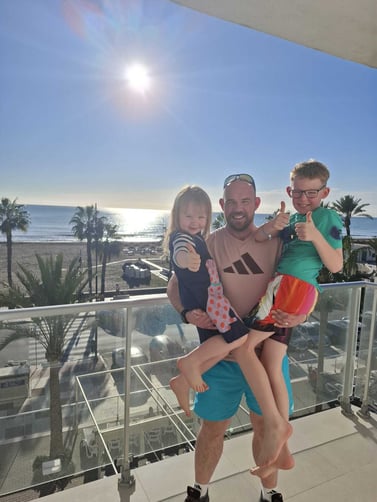
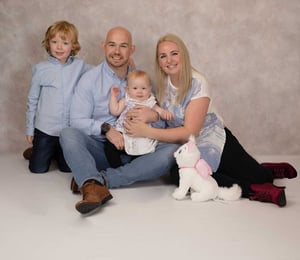
Ciaran enjoying being a dad on holiday with Seb and Enya - his family was now complete.
“We hadn’t quite finished”
When Seb was about three and a half, I kept having a recurring dream of walking down a beach holding the hand of a little girl. It was like I was watching a film. I’d zoom in and look down, I wouldn’t see her face, and then I’d wake up. I kept having these dreams. One day I said to Jen, we haven’t finished. I’d like to try again. And she said, so would I. Because we’d lost Seb’s twin, we just felt like we hadn’t quite finished.
By then we’d moved north. All the first part happened when we were down south, and I’m up in Leeds now. We started looking into clinics and that’s how we ended up at Care Fertility Sheffield for part two of our journey.
We immediately made the lifestyle changes we’d made the first time. We didn’t rush straight into things. We spent a good six months figuring our lifestyle out and giving my body more of a chance to sort itself out. Then we started treatment.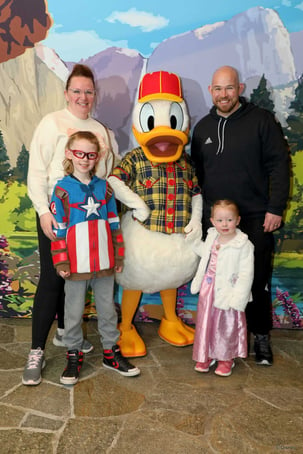
Ciaran knew he and Jen were destined to have another baby, and so they went on to have Enya with the help of Care Fertility Sheffield.
On that first fresh cycle, we had a positive pregnancy test, but we miscarried shortly after. That was tough. But because we’d already had Seb, and we’d had that experience, we knew what to do to support each other. So, we put those things in place. We stepped off the ladder for three months or so to get ourselves emotionally ready for another cycle, and then we went back for a frozen cycle. We did the same thing again. We said, right, we’re going to put two in. We haven’t got loads of money, so we’re just going to put two in.
We had a positive pregnancy test, and when we went for our scan, there was one baby growing, with a little heartbeat. My daughter, Enya, was born from that pregnancy.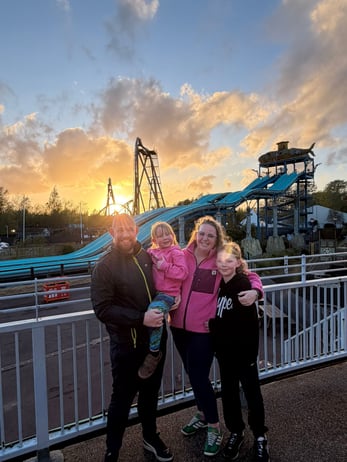
Ciaran, Jen, Seb and Enya enjoying time together as a family.
It’s a lot quicker to tell than the first time, mainly because we managed it a lot better. But our clinical support was also completely different, and it definitely helped us manage it and feel more comfortable.
From my diagnosis to Enya being born, it was about nine and a half years. Seb is 10 now and Enya is six. They’re the terrible twosome, always up to mischief together or arguing with each other. They’re at that age. But it’s a blessing, an absolute blessing. Not a day goes past that I don’t take a moment to think how lucky I was, because at one point it looked like it might just be me and Jen.
“No guy should feel like we felt”
After Enya was born, I realised there was still a certain amount of processing I had to do, and I found the HIM fertility group that Fertility Network were running at the time. I’d only been to a couple of sessions when they said they were going to Everest base camp to raise awareness of male fertility. I’ve always had a fascination with mountains, so I was like, great, I can go to Nepal and raise awareness of fertility.
While I was there, I had this epiphany. If I needed this, other people are really going to need it. Do people really know about lifestyle changes? Do they know how to put them into practice? When I came back, I started supporting guys and writing free programmes for anyone I’d spoken to who wanted to improve their fertility. From that, the Male Fertility PT was born, and I started to train other guys.
Along the way I met Sean Greenaway, and I sent him a message saying, do you fancy starting a podcast on this? So we started the Male Fertility Podcast. It took a while to get going because we were trying to make it perfect. What I’ve learned now is it doesn’t need to be perfect. You just get it out.
Then more guys started talking to us, wanting more support. A couple of summers ago I flew down to see Sean in sunny Cornwall, and we came up with the idea of the Male Fertility Hub, the world’s first male-only online platform supporting men through fertility struggles. There’s a really active community where guys talk every day about their experiences, lifestyle changes, whatever you want to talk about. We have online meets every month with no agenda, where we just see what people are thinking and where they need support. We also have in-person meetups, webinars, and panels, all based around male fertility and supporting the men who need it.
It’s very simple to join. Just go to our website, themalefertilityhub.com, and register at the top. From there you can get into our online community and our WhatsApp group, which is extremely active and full of supportive men, ready to share their experience and just be a listening ear.
The main objective is that no guy should feel like me and Sean felt when we were going through it. For me personally, no man should get to the point where he thinks the only option is to take his own life. That’s the extreme, but between that and where I am now, comfortable talking about it, there are over a million guys in the UK who need that support. Wherever you are in the journey, you’re not alone. Other guys who have been through it are there to support you and listen to you.
“Do the best you can 90% of the time”
Ultimately, you can’t live a perfect life. It’s a crazy world out there. I always say to people, try and do the best you can 90% of the time. Guys especially feel like they have to cut everything out. We go to the extremes. That’s fine, but you’ve got to think about the impact stopping everything will have on you as well. If you enjoy a beer with your Sunday dinner, that’s still okay. One beer isn’t going to destroy everything. Going out and getting tanked at the weekend might, but you’ve just got to be sensible. Stick to things 90% of the time, be selective with the other 10%, and live, because you’re still living. It’s just a difficult chapter.
And it’s okay to have that open discussion about what you need as a couple. I’ve never had a conversation with a couple, or a man, who’s said it didn’t affect their relationship at all. It does. You have to communicate, otherwise you both end up in the wrong positions and mindset.
It can be hard. Talking about it brings up these emotions, but it’s important, because guys need to know they’re not on their own. There are so many guys out there going through a similar thing. We need to try and break that stigma down, one conversation at a time.
Ciaran’s story shows how different every fertility journey can be. There can be waiting, heartbreak, uncertainty, and decisions you never expected to make. It’s also a reminder that fertility treatment affects everyone involved, and that being asked how you are, at the right moment, can make all the difference.
To speak to our patient enquiry team, call 0800 564 2270 or click here to get in touch.
