

This Endometriosis Awareness Month, it is important to remember that conditions like adenomyosis deserve the same attention and understanding as endometriosis. Both conditions can significantly impact women's lives, and both deserve proper diagnosis, treatment, and support. Greater awareness, earlier diagnoses, and continued research are essential to improve reproductive and fertility outcomes. No one should have to wait years for answers.
Awareness is the first step toward change, leading to early diagnosis. Diagnosis leads to better care, and better care empowers women and all individuals affected to take control of their reproductive health. If you recognise symptoms described in this article, don't hesitate to speak with your healthcare professional about your concerns.
What is adenomyosis?
Adenomyosis is a common benign gynaecological condition that affects women and individuals with a uterus worldwide. Think of your womb (uterus) as having two main layers: the inner lining (endometrium) where a pregnancy would grow, and the muscle layer (myometrium) that contracts during your menstrual cycle. In adenomyosis, the inner lining grows into the muscular wall where it doesn't belong. This causes the muscle layer to react to the cells of the lining and, in severe cases, leads to enlargement of the uterus and can lead to heavy, painful periods.
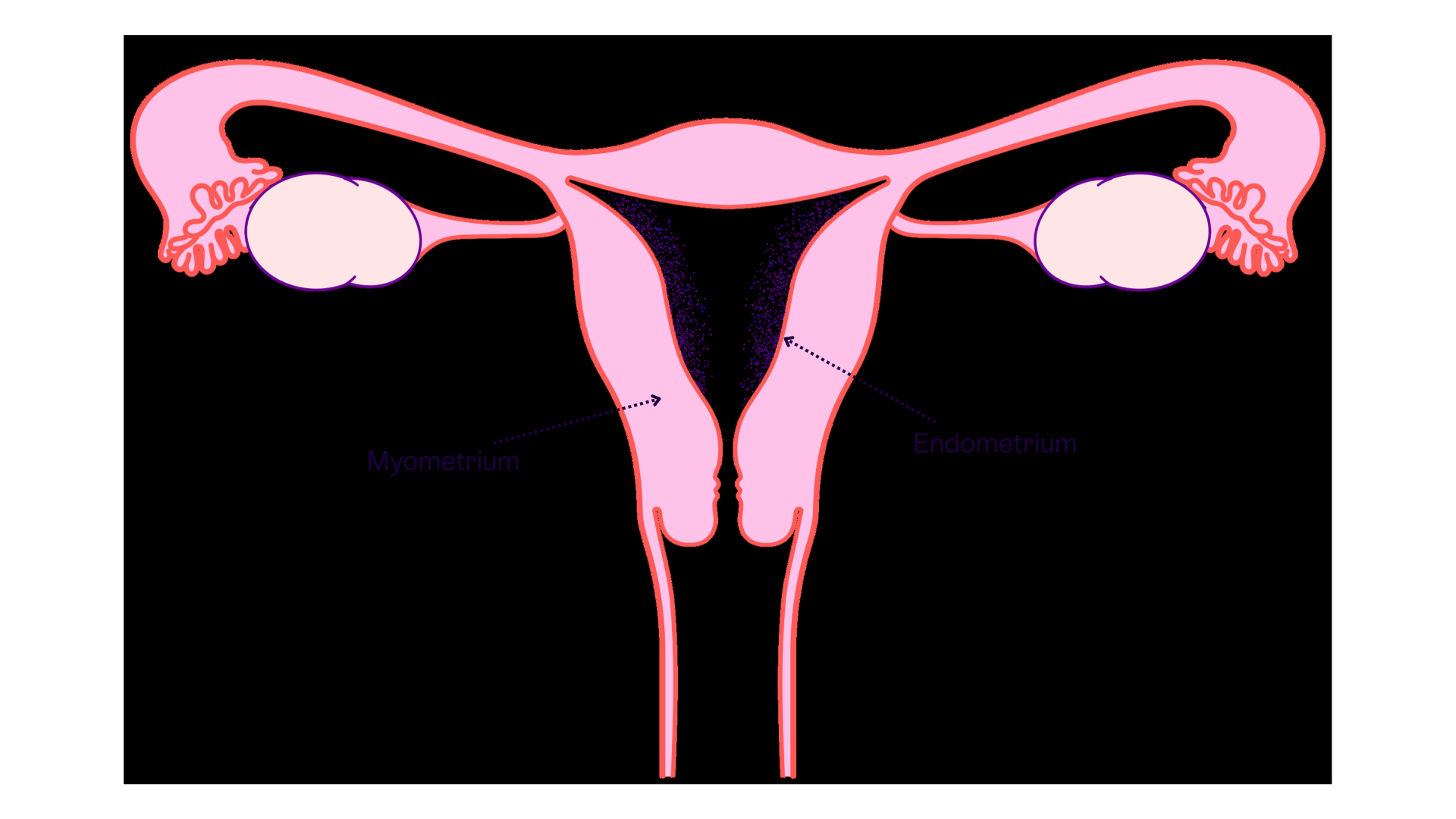
Unlike endometriosis, where the uterine lining grows outside the uterus, adenomyosis occurs within the uterine muscle itself. While these conditions can co-exist and are often called ‘sister conditions’, they are distinct and require different approaches to diagnosis and treatment.
What are the symptoms of adenomyosis?
The symptoms of adenomyosis can significantly affect your quality of life and overall well-being. Symptoms of adenomyosis often overlap with those of endometriosis and fibroids. The most common symptoms include:
It is important to remember that symptoms can vary greatly from woman to woman – some may have severe symptoms while others experience mild discomfort. Almost a third of women and people with a uterus will have no symptoms. If you're experiencing any of these symptoms, especially if they're interfering with your daily activities, it's worth discussing them with your healthcare provider.
How common is adenomyosis?
Adenomyosis is more common than previously thought. Historically, it was a condition diagnosed on histology in women in their late 40s after hysterectomy (removal of the uterus) for heavy and painful periods. Over the last two decades, with advances in diagnostic tools and increased research in this area, it has become clear that adenomyosis is prevalent across all stages of life, from adolescence through the reproductive years to the perimenopausal period.
Adenomyosis affects a significant portion of women with fertility problems. A recent review that analysed multiple studies reported a wide variation in the prevalence of adenomyosis depending on the population studied and the diagnostic method and criteria used, emphasising the need for better awareness and diagnostic tools. The findings suggest that 1 in 10 women with fertility problems have a diagnosis of adenomyosis; this may just represent the tip of the iceberg, as many cases go undiagnosed due to the lack of use of standardised diagnostic criteria.
How is adenomyosis diagnosed?
One of the biggest challenges with adenomyosis is delayed diagnosis.
Symptoms such as painful or heavy periods are often normalised, meaning many women are told their symptoms are ‘just part of having periods’. Because of this, diagnosis can take years. Research suggests the average diagnostic delay for conditions like adenomyosis and endometriosis may be around 10–11 years, during which symptoms may worsen and quality of life can significantly decline.
Diagnostic tools:
Transvaginal ultrasound scan: A transvaginal ultrasound is a safe, widely used, and first-line tool for diagnosing adenomyosis. The scan gives detailed images of the womb (uterus) and ovaries. A slim probe is gently inserted into the vagina, allowing one to see the womb (uterus) and the muscle layer for signs of adenomyosis. It allows for clearer visualisation than an external or transabdominal scan.
Healthcare professionals use a standardised set of criteria, the revised MUSA (Morphological Uterus Sonographic Assessment) criteria, that outlines the features of adenomyosis such as changes in the muscle layer of the womb on a transvaginal ultrasound scan. Two and three-dimensional transvaginal ultrasound scan is as reliable as an MRI for diagnosing adenomyosis.
MRI: MRI is a useful tool when there is diagnostic uncertainty after a transvaginal ultrasound scan in complex cases. This is indicated in very few cases.
What is the impact of adenomyosis on pregnancy outcomes?
For women and individuals with a uterus planning to start or expand their families, understanding how adenomyosis affects pregnancy is crucial.
Studies suggest that adenomyosis can affect various aspects of pregnancy, from conception through delivery. Women with adenomyosis may face challenges with fertility, including difficulties getting pregnant naturally or through assisted reproductive technologies. During pregnancy, there may be an increased risk of miscarriage and lower live birth rate.
Some types of adenomyosis may affect pregnancy more than others. When the condition involves the inner layer of the womb muscle (inner myometrial or junctional zone adenomyosis) or is present widely throughout the muscle (diffuse adenomyosis), it may be linked to poorer pregnancy outcomes compared with smaller, more localised areas of adenomyosis (focal adenomyosis) or disease affecting the outer part of the womb (outer myometrial adenomyosis).
Adenomyosis may also be associated with an increased risk of pregnancy complications that require closer monitoring by healthcare providers. These include high blood pressure in pregnancy, babies growing more slowly or being smaller than expected, problems with the placenta (such as it being in the wrong position or separating too early), a greater chance of needing a caesarean section, difficulty delivering the placenta after birth (retained placenta) and heavy bleeding after delivery.
However, it's important to remember that many women with adenomyosis do successfully conceive and have healthy pregnancies. The key is working closely with your healthcare team to understand your individual situation and develop an appropriate management plan that optimises your chances of a successful pregnancy while effectively managing the condition.
What are the treatment options for women with adenomyosis undergoing assisted conception?
The treatment approach for women with adenomyosis requires careful consideration of how to manage adenomyosis symptoms while optimising fertility treatment success.
Treatment options may include:
-
Frozen embryo transfer: This means that all embryos created are frozen instead of being transferred a few days after egg collection. This approach allows time to treat adenomyosis before pregnancy, reduces inflammation in the womb, and is associated with higher pregnancy rates compared to fresh transfer. Frozen embryo transfer may not be the most suitable option for everyone with adenomyosis. The best treatment depends on your age, ovarian reserve, the severity of your adenomyosis, and your fertility history.
- Hormonal therapies to temporarily reduce the oestrogen levels and hence reduce the inflammation and activity of adenomyotic tissue before starting fertility treatments. Some women may benefit from GnRH agonists or aromatase inhibitors (letrozole), which temporarily suppress hormone production and can help shrink oestrogen-dependent adenomyotic areas. This also helps in controlling symptoms of adenomyosis. These are indicated for use in assisted conception treatment cycles only, and there is conflicting evidence on their role in improving pregnancy outcomes.
- Luteal phase support: Adenomyosis is thought to affect how the womb responds to progesterone, an important hormone that supports early pregnancy. Even though blood levels of progesterone may be similar in women with and without adenomyosis before a frozen embryo transfer, the womb in women with adenomyosis may not respond to the hormone as effectively. Because of this, consideration may be given to additional progesterone support during treatment to help improve the chances of implantation and early pregnancy. However, research in this area is still limited, and more studies are needed to confirm whether extra progesterone truly improves pregnancy outcomes in women with adenomyosis.
- In some cases, surgical interventions might be considered, though this requires careful weighing of benefits and risks.
Some interventions work best before starting assisted conception cycles, while others can be used during treatment. Each woman's treatment plan should be individualised based on the severity and type of adenomyosis, her fertility goals, previous treatment responses, and age.
Diagnostic advances: The future of adenomyosis detection
The field of adenomyosis diagnosis is rapidly evolving, with exciting advances that promise to improve its accuracy and accessibility. Standard validated diagnostic methods have included transvaginal ultrasound and MRI, but newer technologies are emerging that could revolutionise how we detect and monitor this condition.
Artificial intelligence (AI) has enormous potential for image classification. AI technology can analyse images with remarkable precision, potentially identifying subtle signs of adenomyosis that might be missed by traditional interpretation methods. As part of our research, we have evaluated an automated machine learning model trained on several thousand ultrasound images to aid in diagnosing and classifying adenomyosis. We aim to further develop this model using larger datasets to improve accuracy and clinical application.
These AI-powered diagnostic tools could improve diagnostic confidence across different healthcare settings and reduce the time to an accurate diagnosis. Additionally, researchers are exploring new biomarkers, substances in blood or other body fluids that could indicate the presence of adenomyosis. Advanced imaging techniques are also being refined to provide clearer, more detailed pictures of the uterine structure. These diagnostic advances hold great promise for reducing the average time to diagnosis, which currently can take several years, and ensuring that more women receive appropriate care sooner.
.jpg?width=290&name=2%20(1).jpg)